December 18, 2016

final-card

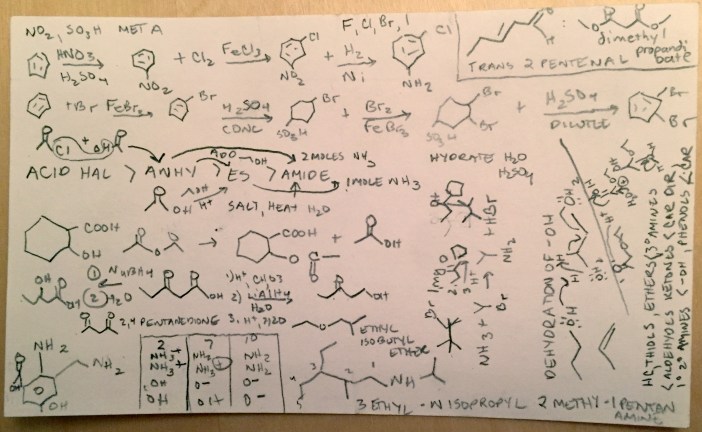
That’s the 3” x 5” card I took into the o chem final with me. Each student could pack one side of an index card with as much information as possible. Of course it didn’t help much, but it was comforting to have it just the same. Truly impressive was the amount of information by quick-witted classmate, Devin, was able to get on his card. I showed it to Dave and he said I should make a t-shirt out of it with “actual size” written below.

img_0037

The final went OK. Once the test was handed out, I had the sensation of diving under water and swimming a few strokes, but when I resurfaced it was 2 hours later with 6 pages of questions and reactions filled out.

Now I’m free of the studying imperative, and I’m tap dancing tonight and lindy hopping on Wednesday. During the Winter of My Discontent of two years ago, Harry Potter, one of my favorite leads, was also going through difficulties. He was suffering from unrequited love and looking for relief by catching glimpses of the dance-loving object of his affections. Harry and I decided to try different dance venues and styles and sampled blues and contra dancing. I wanted to like contra dancing but found the constant spinning nauseating and was unenthusiastic about the plethora of utilikilts worn by the leads.

Blues dancing is a full-body contact sport and not for the faint of heart. One night, when Harry and I were entwined on the dance floor and his would-be inamorata was present, he said, “What do you think she thinks of us dancing together?” I said truthfully, “Not a thing.” Sad but true, most people don’t give a shit about you, especially if they are not romantically interested in you.

Harry is very youthful looking and was carded at every bar we went to. I remember one night a guy asked me if Harry was my son (we are both fair and of similar builds). It occurred to me later how creepy that question was, who the hell goes blues dancing with their offspring? Ultimately none of the other dance styles was as much fun as lindy hopping but I’m glad that Harry was willing to try anything that winter.

I am currently stalking a lead I met in a Balboa class a couple of months ago. If you don’t know what Balboa is, check this out. Balboa, like o chem, is not so intuitive for me, but it’s part of the dance vocabulary I want to learn. This lead and I exchanged info and became friends on Facebook. I checked him out on-line and see that he and I went to the same university, but that I graduated two years before he was born. Sigh. Oh well, good dance chemistry is hard to find, and if he’s down, I’m up for it. And he seems to be, so what the hell.

Last summer, while taking the ill-fated o chem class at the UW, I heard from or saw all three of my former favorite lindy hop leads, Tom, Harry Potter, and Vlad the Impaler, in a single one-week period. Tom messaged me from South Korea, and wrote about finishing up his time in army and ice climbing with South Korean bad-asses. I personally think ice climbing is a death wish but wish him well, it makes him so happy. I ran into Harry after not seeing him for more than a year. We reunited happily and went out dancing a couple of times, and it’s like putting on a perfectly broken-in pair of jeans, easy and effortless.

Vlad and I passed each other on the UW campus, but exchanged only smiles. He was the catalyst for several of the aforementioned epic hangovers. The aftermath of one of them included a friend of mine, who is in recovery from alcohol addiction, keeping me company while I was pale and sick. She said, “I must really love you because this is totally fucked up.” I owe her for that one.

Vlad introduced me to my preferred bourbon, Marker’s Mark. It gives a marvelous esophageal glow that never gets old.  But dancing is an even better high, and you don’t wake up the next morning feeling like roadkill. Better stick with the dancing.
December 1, 2016

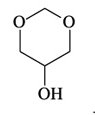
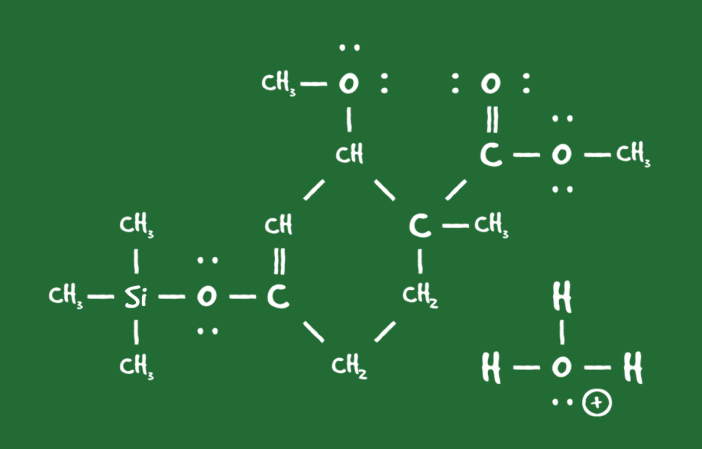
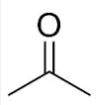
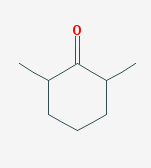
It’s been 10 weeks of o chem, 5 days a week, plus one day of lab, and the final exam is 12 days away. A classmate with a metal stud embedded over her cheekbone and an elaborate rose tattoo on her forearm said, “I’m so over o chem. I don’t really care about carbon.” I gasped inwardly but said nothing. But the reality is my lab partners and I are getting befuddled and punchy from the avalanche of new reactions pouring down on us. Acetone, 2.6-dimethylcyclohexanone, and 5-hydroxy-1,3-dioxane, start looking like adorable little aliens to me. There they are below.

This is how know I need to take a break, and taking a break usually means dancing. But there is a problem, and it’s called winter in Seattle. Today the sun rose at 7:38 am and set at 4:18 pm, which is less than 9 hours of gray, cloudy light. It’s enervating, and makes me want to hibernate in fuzzy slippers. The darkness reminds me of working on a project in St. Petersburg one late November with a man named Volodya.

St. Petersburg is at 59.9 degrees latitude, and Seattle is at 47.6, so those northern Russian winters are very dark indeed. I asked Volodya how he and his friends survived the winter, and he said, “We simply endure.” And the people of St. Petersburg are famous for their endurance—they survived an almost 900 day siege of their gorgeous city courtesy of Nazi Germany from 1941 to 1944 at the cost of about a million and half lives. I had a hard time imaging the horrors of the siege while wandering around the canals of the city at night, quiet and beautiful and sparkling with snow.

The house of my favorite Russian author, Vladimir Nabokov, is in St. Petersburg at 47 Great Morskaya Street. That house so filled his heart and mind that he was unwilling to buy another house for the rest of his life though he lived in Germany, France, and America. I love that though he was a brilliant writer and teacher, his real passion was lepidopterology.

In his autobiography, Speak Memory, Nabokov describes butterfly hunting and how he completely lost track of time, or maybe more accurately felt outside the constraints of time, when engaged in his passion. He said, “A writer should have the precision of a poet and the imagination of a scientist.” Another great quote, “I discovered in nature the nonutilitarian delights that I sought in art. Both were a form of magic, both were a game of intricate enchantment and deception.”

Nonutilitarian delights, what a phrase! For me, that’s what dancing is, reducing the world to two people and music and movement.

November 20, 2016

cinnamon

This is cinnamaldehyde, an attractive little molecule, also known as oil of cinnamon. It’s what gives cinnamon its pungent scent and flavor and is one of my favorite spices. Each molecule of stuff, whether it’s cinnamaldehyde, water, or sucrose, tells a story about how the atoms in that molecule interact with each other and the world. There are love stories, break-ups, long-standing friendships and entrenched feuds. Everything we see, are, and touch, is a bunch of molecules knocking into each other, breaking chemical bonds and forming new ones at unimaginable speed, driven by electrical charges that attract or repulse each other. We experience those forces as sound, heat, and light, among other things.

My beloved friend Heidi changes the energy of a room by just walking into it. I laugh more and say witty things when she’s in vicinity. The first time I saw my husband, the rest of world went out of focus and I could only see him, the bright spot in the middle of a sea of fuzz. When I told Smart Emily I was taking chemistry, she sent me Chemical Party, a delightful short video that portrays the elements as people. It cracks me up to attribute human motivations to chemical interactions. The noble gases are awesome, but hydrogen and carbon steal the show.

When I first started learning Russian as a college freshman, I was frustrated to tears trying to read Cyrillic. It looked like a bunch of twigs smashed together. Example:

Все счастли́вые се́мьи похо́жи друг на дру́га, ка́ждая несчастли́вая семья́ несчастли́ва по-сво́ему.

This is the opening of Leo Tolstoy’s Anna Karenina, “Happy families are all alike; every unhappy family is unhappy in its own way.” I was totally hooked by that line, I needed to know what happened next. I read it in English at 15 and was inspired to declare myself a Russian lit major. Years later I re-read it and thought, Anna, why do you have to make everything so fraught? Maybe when I read it again in my dotage I’ll like it again.

Reading Russian actually isn’t that hard. It’s just another alphabet, once you get the letters you can sound out anything. Piecing them together is where the trouble starts in earnest. The Foreign Service Institute ranks languages according to the number of hours it takes an English speaker to be proficient in reading and speaking. Russian gets a 4 out of 5, as do Pashto, Urdu, and Vietnamese. Category 4 languages take about 1,100 hours. For comparison, French and Italian are category 1 (at 600 hours) and Arabic, Chinese, Japanese, and Korean are category 5 (a whopping 2,200 hours).

So Russian wasn’t a walk in park, and neither is o chem. I don’t think there is a chemistry equivalent to the Foreign Service language rating, but I think o chem ranks far below physical chemistry, which is more like physics thermodynamics, which sounds more like Chinese in terms of thousands of hours of study. My UW instructor wasn’t concerned with us knowing the nomenclature of different molecules, but I found that the nomenclature was crucial to understanding chemical reactions. Kind of like learning Cyrillic letters, or like learning how to conjugate the verb “to be” in any language—tedious memorization, but once it’s done it frees you to move around conversations with alacrity.

The point of learning a language is to communicate and we all do that one way or another. In that sense, I think there’s an intuitive element to the study of a foreign language. No matter how badly you butcher a language, if you manage to get your point across to a native speaker, you succeed and it’s thrilling. You can use your eyes, your charm, tone of voice, and hand gestures to ask for directions, find food, or find friends. Charm gets you nowhere in o chem. I find nothing intuitive about it, nothing comes for free, so every leap in understanding is an unexpected pleasure.

My final for o chem is in 3 and half weeks and I am not a happy test-taker. My heart rate goes up and I offer suffer from brain freeze if I don’t immediately see my way around a reaction. I sat next to a girl this summer who was a nervous wreck before our first exam. In an attempt to help her restore perspective, I said, “What’s the worst that can happen? You fail, life goes on.” She blanched. “If I fail, I can’t get into my major. If I can’t get into my major, I won’t have the career I want.” Dear god, is she right? I shut up after wishing her luck.

My lizard brain goes into overdrive during exams. I wish I could turn it off and behave optimally at all times, but where would be the fun in that? I de-stress by watching the series Ray Donovan (Ray is played by the fabulous Liev Schreiber) while tenderizing my hamstrings on foam roller. It’s set in my hometown of LA and I’m envious of the way the characters flit around the various neighborhoods as though they exist in a traffic-free universe. If they were really driving from Calabasas to Hollywood to Malibu and back, the action would take days, not hours. Jon Voight plays Mickey, Ray’s father, and I think Mickey is exactly my mom’s kind of guy–charming, feckless, and amoral. The dialogue is full of f-bombs delivered in broad South-Boston accents. Are they accurate? I don’t know, but they inspire Patrick, who is making food in the kitchen, to start screeching “Where’s my goddam bagel? Why can’t I open the fuckin’ fridge?” His accent then wanders over London before landing in what I assume is Scotland, all the while berating his bagel and condiments. I find this very relaxing and will miss him when he goes off to college next year.

November 3, 2016

flasks_test_tubes_liquid_blue_background_80323_2560x1440

Back to the Twins. Two years ago, my beautiful friend Kate and I were taking multiple lindy hop classes at Century Ballroom in Capitol Hill. It was a tough time for us both. She was getting a divorce and I was dealing with my mom’s dementia, which included getting my mom into a care facility, selling her condo, and taking over her finances. Lindy hop was a welcome relief– dancing, drinking, and getting a break from depressing realities. The classes we took were fairly large, around 20 couples made up of leads (usually, but not always, men) and followers (usually, but not always, women) and we rotated partners every minute or so. It was hard to remember the leads’ names, especially when trying to learn a new dance step and not kick anyone in the shins. Kate and I came up with nicknames for people along with the help of the female Twin, and those names often stuck long after we got a grip on their real names.

Kate and I befriended the Twins, who aren’t twins but are siblings who are 3 years apart in age and about a foot apart in height, and both really good dancers. We called them the Twins because they seemed to share that special bond of womb-mates; their obvious affection and consideration for each other made them a pleasure to be around–they both utterly charmed me. They had their own language and slightly subversive way of looking at the world.

Eventually their real names materialized as Tom and Emily, and Emily morphed into Smart Emily when another Emily, AKA Skinny Emily, came onto to the scene despite the fact Smart Emily is not fat and Skinny Emily is not dumb. It’s just that Smart Emily is extra smart and Skinny Emily is really extra skinny, so the pointy parts about their personality/appearance are what stick as their names.

Tom was an army man and an elegant lead who would also offer to walk me to my car after a night of dancing. Capitol Hill could get pretty skanky around midnight and it was nice to have an escort. He was so self-deprecating that I only found out later that he was a West Point grad. Later, my husband, Oliver, met him and said that he was a really smart guy. Oliver rarely says that about anyone, and Oliver is a really smart guy. Once, after we’d all had a dance class together, Tom put on a knit cap before we all went out to drink. I told him he looked like a cat burglar, and he said, “Well, I do like pussy.” All of this only endeared him to me even more.

So Kate, Smart Emily and I dubbed leads Sir Stomps A Lot, Harry Potter, Vlad the Impaler, and other, less socially acceptable names. Sir Stomps A Lot unsurprisingly hit the ground with a lead foot, Harry Potter looked a lot like a blond Daniel Radcliffe, and Vlad the Impaler had a deep widow’s peak and dark coloring. That Fall, Kate and I danced and often drank and to excess. Kate and I had some epic hangovers and now look back on that time with a sense of nostalgia mixed with disbelief. What the hell were we thinking? Two women in our forties having way too much fun pretending shit wasn’t hitting the fan right left and center in our real lives.

That Fall marked the beginning of what I now think of as my Winter of Discontent. I hated having to transition my mom into assisted living. I told her she was just going to try it out for a few weeks knowing full well that there was no going back to independent living for her and that this was one of her worst nightmares. When the movers came to take her furniture, they found stashes of things that she had said were stolen—a common occurrence among people with dementia. They hide things like jewelry, credit cards, and cash then forget where they hid them and that they even hid them in the first place. My mom was convinced that people were breaking into her condo every night and would drift over to my house in the evenings. This anxiety around sunset is a typical among people with dementia, called “sundowners syndrome.” She called the police a few times and filled out robbery reports. I remember being suspicious about the alleged robberies when her details didn’t add up—she’d say that she locked herself in the bathroom and that they banged on the walls and scratched at the doors, but there were no marks anywhere in her condo. I stayed at her condo a few nights, but couldn’t get any sleep because one of her boyfriends would show up at midnight and talk loudly for hours. It was nightmarish.

After she moved into assisted care, I cleaned out her condo and found a wallet stuffed with cash behind books in her bookshelves. I had to get all of her furniture out of the condo, and the movers very kindly gave me a small pouch filled with gold jewelry that she had squished behind her headboard. Though all those events were distressing, the thing that really got to me was finding a box of love letters from one of her old boyfriends. He died years ago and she probably couldn’t even remember his name. I didn’t know what to do with the letters, wasn’t tempted to read them, and ultimately recycled them. It really creeped me out—how much crap are we all leave behind that will be meaningless to the ones left behind, and yet those left behind still have to do something with it? It made me want to go through all my stuff and dump it all. I don’t want anyone connected to me to have to do what I did for my mom.

Years ago my college roommate made me promise that if she dies first I will go through all her shit and dispose of it appropriately. I didn’t get her request at the time, but now I do. It’s nice when you come across your great-grandmother’s love letters to your great-grandfather, but what do you do when you come across her letters to a different lover that has no connection to her descendants? Reading those letters seems like eavesdropping, whereas the letters to great-grandpa are heartening bits of family history, proof that all is right in the world and fated to be.

Dancing has the power to let me disappear into a flow state and release all of the burdens and anxieties of real life. Oddly, it has much the same effect on me as solving chemistry problems. I’m glad to have both of them in my life.

October 10, 2016

ochemIt was one of the Twins who suggested I go for the biotechnology lab specialist program. The Twins aren’t actually twins, but more on that later. I went out to dinner with the girl twin one night last Fall.  She knew I was taking biology, and asked me what an isotonic solution was, and was happy with my answer. She’s a lab manager at one of the many biotech companies in South Lake Union, and also a good lindy hopper. If you don’t know what lindy hop is, check out this clip from 1941’s iconic movie Hellzapoppin’.
She had done the program herself and it had been a game-changer for her. I had originally taken biology because I wanted to have a bit more background for grant proposals I was planning to write for an organization doing cancer research. I thought it was really just for fun, and I’d always liked the structure of classes and their defined deliverables.

I had spent years writing grant proposals for good causes, always on a volunteer basis, and was tired of what I call the NGO pink collar ghetto, aka expensively educated women working for not much money for programs that make the world a better place. Sort of like all the volunteering that goes on at schools – usually by moms with large skill sets doing stuff that would cost a lot if outsourced.

I looked into the biotech lab specialist program and was intrigued. I worked for years on projects based in Russia to support whistle blowers in their military-nuclear industrial complex. They were impressive people, mathematicians and physicists who were worried about the effects of plutonium production on the environment and public health. People who lost their jobs when they voiced their concerns, who sacrificed their livelihood and status for a principle. I felt that their work was the real front-line stuff, gathering and analyzing data, then publishing their findings.

As someone who had dropped out of math after 10th grade, that kind of work was out of my reach. I grew up in a family that discouraged a disciplined approach to learning. If it didn’t come easily, why bother? So I did the stuff that came without too much pain, and was too embarrassed to ask for help when I didn’t get concepts quickly. What a mistake.

It’s more Zen to say there are no mistakes, only learning experiences, but I have regrets. I’ve since realized that time and effort can make up for a good chunk of perceived intellectual shortcomings. One of the things I’ve tried to impart to my sons is that no matter how good you are at something, you are going to hit a conceptual wall, and you better have the resources to deal with it. No matter how good you are at something, someone else will be better at it. Is that going to stop you from pursuing something you are curious about or that makes you feel alive? Of course not.

My first o chem quiz was last Friday and I did fine. I told Patrick and he said “Failing less as time goes on.” Not high praise, but I’ll take it.

October 7, 2016

cropped-chemistry-2.jpgI like to observe the atmospheres of classrooms. Last summer’s o chem class at the UW wins the anomie award. About 80 of us sat in lecture hall, nobody talked, and many derped around on their iPhones or laptops throughout the lectures. Granted, no lab went along with the class, and labs build camaraderie rather quickly. Something about open flames and combustible materials encourages communication. Even though I was an undergraduate at a giant public university, my major was odd enough that my classes were more like graduate seminars. I now feel for the poor slobs that have to attend classes of 80, 100, or a lot more.

My current class at Seattle Central is 24 people. The instructor is engaging, but she is low-talker and would benefit from microphone or subtitles. We all strain forward to catch her words. I am delighted that my study/lab mate is the tall girl I first noticed in a microbiology class last spring. She asked questions that I wish I had thought of, they were so insightful and deep. We have to give a group presentation in o chem, which I think is a great way to encourage cross-pollination of students.

I loved Adam Grant’s article in the New York Times “Why We Should Stop Grading Students on the Curve.”

He talks about how limiting the amount of students who can excel sends a message that success is a zero-sum game. Grant tried to encourage collaboration and community in his class at U Penn, and found that mastery of class material increased when the class culture rewarded helping others. He did something quite clever on his final exam’s multiple-choice section, the most difficult section of the exam. Students could pick the question where they were least sure about and fill in the name of a classmate they thought might know the answer. Both would earn points if the classmate gave the correct answer.

That motivated students to study together in groups, then to share information among the different groups. Grant notes that in the real world, employers “…reward people who make the team and the organization more successful.” Grant also has studied the differences between “givers” and “takers”, those who like to help others and those whose aim is to come out ahead. “In the short run, across jobs in engineering, medicine and sales, the takers were more successful. But as the months turned into years, the givers consistently achieved better results.” Results in the real world are what we’re supposed to be aiming for, and not just a good grade in a class.

The instructor in my math class last winter had us sit in groups of four, do group problem solving, and then rotate seats every two weeks in order to work with new people. That worked for the first few rotations, but then I landed at a table that had really good rapport. We said, fuck it, we’re not rotating, and no one seemed to notice. We were definitely a motley crew: a 17-year-old who looked about 12 and smelled like he slept outside in a pile of leaves (not bad, just kind of funky); a guy in his mid-twenties who had the florid completion and booming voice of a 19th-century English tavern keeper; and a young woman in her early twenties who had the odd habit of fanning the pages of our math book over her nose-I’m not sure if was for the sensation of the pages touching her face or the scent of the book; and me. The young woman was clearly the brains of our island of misfit toys and generously dragged the rest of us along in understanding the material. I didn’t get much from the instructor, but I got a lot from my classmates. I grew fond of them—thanks, guys.

October 4, 2016

When something’s on my mind, I see it everywhere I look. One day it was left-handed people. When my biological clock starting ticking, it was pregnant women, who suddenly seemed to materialize out of cracks in the sidewalk. It’s the phenomenon of seeing what you look for, of noticing something for the first time when it’s actually always been there.

This year is apparently the year of the chemist for me. Last winter, one popped up at a Shambhala Center mediation session. Everybody sits around drinking coffee and talking before gearing up to sit and do nothing. I heard Lilli talking about her research at a big Seattle Cancer Center and started chatting with her.

Lilli had taken a circuitous route to doing chemistry. She had been a bike messenger in Salt Lake City for many years before deciding to go to college in her late twenties. She told a story of flying into the Salt Lake City airport with a flight attendant who gave the spiel about preparing for landing and added, “Please set your time-keeping devices back 50 years.” Half the plane laughed, the other half didn’t. She’s now a good friend and has been endlessly encouraging about pursuing a job in research.

Last week, I overheard a woman in my workout class talking about Escherichia coli, the bacteria found everywhere in the environment, animal guts, and our own guts. She’s a chemist at a lab at the UW. We struck up a conversation and she invited me to check out her lab, which sounds like big fun to me. I think we’ve been working out together for at least 2 years and I had no idea about her particular obsession.

What else is in plain sight that I’m not seeing?

October 2, 2016

Organic chemistry is just the study of carbon atoms that are bound to other carbon atoms, hydrogen atoms and/or possibly other elements in the periodic table (like bromine or oxygen). Carbon combines with other elements to form a mind-boggling number of compounds. Approximately 85% of all known compounds are organic, meaning that they contain carbon; the rest are considered inorganic. Organic chemistry has long been the thorn in the side of those desiring a medical career or one in biochemical research, a cruel hazing ritual that results in dashed dreams and more business majors. The name itself is an anachronism, dating back to a time when chemists thought that substances from living things, or organisms, had a vital life force that differentiated them from stuff like rocks or salt. It sounds plausible to me. Trees are different from doorknobs, glass and starfish seem to have little in common. Then in 1828 Friedrich Wöhler made urea, an organic compound, by heating ammonium chloride and silver cyanate—two inorganic compounds. I would like to have seen his face when he worked out what he had discovered. After his findings were accepted in the scientific community, organic no longer meant vital force and just meant compounds containing carbon.

So why is it considered such a nightmare? Little or no math is involved, so not having calculus is not a barrier to understanding. I think it has to do with learning abstract concepts and then applying them to gajillions of different reactions. You can’t memorize your way through the class, you have to understand each step of a chemical reaction. And the fact that everything is in tiny 3-D. Sometimes I want to say, yeah, whatever, it’s magic and the world is flat. I told one of my lindy hop acquaintances, a PhD in physics, what I was studying and he shuddered. He said he disliked chemistry entirely and it bummed him out even to think of it. That cheered me up considerably.

Luckily, I have a tutor. His name is Dave and we are mercifully electronically compatible. The first person I approached for help would take days to get back to me, which is irritating. When I am burning with a thirst for knowledge, I don’t want to wait around, so I went on-line and found a nice girl with lots of o chem tutoring experience. She couldn’t do it, and I got Dave instead. Dave is seemingly always thinking about chemistry and is always ready with an explanation. He’s even texted me pictures of solutions drawn on napkins, which I find totally endearing. He’s also sent pictures of his kittens, and advises shots of bourbon when I’ve been at it too long.

Yesterday, my younger son returned from a weeklong school trip to a farm with a tale of cannibal chickens. The farm’s owners had to leave town and left some farm sitters to watch over operations. The owners left instructions to recycle eggshells by putting the shells into the chicken feed. The chickens happily ate the shells, but when the owners returned, they were horrified to see the chickens had started to eat their own eggs. They tried making a contraption in the hen house so the eggs would roll away from the chickens immediately after laying. But the chickens had started surreptitiously laying eggs around the yard in order to eat them. Sadly, the owners had neglected to tell the sitters to grind up the eggshells first, so they fed the chickens big shell fragments. The little buggers had developed a taste for the fragments and ended up eating their young. The owners said they had to get a new batch of chickens and that the cannibal chickens would end up as enchiladas. My son thinks this is proof that the world is a dark and vicious place.

October 1, 2016

After crashing and burning in Organic Chemistry at UW over the summer, I signed up for Intro to O Chem at Seattle Central and just finished the first week. It was great–better textbook, better instructor, more class time. Twelve weeks of general chemistry wasn’t enough prep for UW O Chem. I realized pretty quickly that I was going to choke, passed the first exam but tanked on the second. I was actually relieved that I didn’t get the lowest score. Quite a low bar in other words. However, I kept going to class and liked the lectures despite the unappealing instructor, guy who shut down questions and attributed his demeanor to his “harsh, Eastern European upbringing.” I felt bad for the TA that led our section. I’m sure she had very little mentorship and it was more useful to watch Kahn Academy videos than go to her section. Overall, it was an enlightening experience. Now I get what undergrads go through in these giant weeder classes. Profs who would rather be in their labs doing research and not much access to quality support or guidance. My son Patrick delights in imitating him, calling him Guaco, a bastardization of his name and saying horrible things in what sounds like a messed-up Russian accent. Patrick makes merciless fun of my failure to grasp concepts, seeing how many times he can insert fail or failure into random conversational sentences, but when I really bombed that exam he wrapped his arms around me and says “it’s OK, you’re still the best mom.”

When I took Intro to Chemistry at Seattle Central last winter quarter I felt nervous, just like I always do before starting a class, any class, even if it’s just a language class, or a new job, or having to get up early for flight. The stakes couldn’t have been lower. Not much in the way of consequences if it didn’t work out, but I wanted it to work out, and not just work out. I want to be good at it because I was so curious about the subject. I had started reading Issac Asminov’s A Short History of Chemistry and admired the painstaking experiments early chemists did to find out why elements to what they do and under what conditions. I showed up to class that first Monday morning and it was ghastly. The teacher was bumbling and inarticulate and I actually felt so sorry for him that I resisted the impulse to gather up all my stuff and high tail it out there and instead stayed through the whole dismal session. I signed up for a different section with a teacher who had a passion for the subject and for teaching. He created a fun, exploratory atmosphere in the class. A stark contrast to the UW chem prof.

That winter my friend Kate and I started meditating at the Shambhala Center in Madison Valley. I have trouble sitting still and walking meditations drive me nuts because I start thinking about how slowly we’re walking and looking at peoples’ socks. I think it’s odd that atoms are mostly open space–a void really. Pema Chödrön, the American Buddhist nun, talks about getting used to groundlessness, that nothing is permanent and that we have to stop clinging and grasping to people, things, and ways of thinking So Buddhists and chemists have that in common. There IS nothing underneath us. Just electrostatic forces. Totally weird. Anyway, that’s what I think of when meditating.

August 14, 2016

Last July, Patrick and I were in Anaheim for a dance competition and I had a lot of down time to read and poke around on the computer. On a whim, I decided to sign up for a biology class at Seattle Central. I’d had science envy for a while and thought it would be fun to expand my learning horizons. I hadn’t worked for money since the last century and despite having a B.A. and two master’s degrees, it was rough going trying to get back into the working world after staying home with the kids. I was pretty half-assed in my job search and easily discouraged. Oliver said, go ahead and apply for jobs on-line, but nobody gets jobs that way anymore. He was right of course, but gamely helped me update my resume and edit cover letters. I envied the moms who had kept working as well as the ones who had chosen not to and were happy with their decision.

I had to take a math test to place into the class and studied with Kahn Academy for a couple of weeks. It was fun, and all the Sharps jumped in to tutor me with varying degrees of success. I did fine on the test and started Biology 160 at the end of September.

I loved the class. The other students were focused and determined, the teacher rigorous, and the material fascinating. The teacher was obviously an ex-ballet dancer, rail-thin with a Pacific Northwest Ballet coffee mug and very little sense of humor, but a deep and abiding love of her chosen field. It was a grind – lectures MWF and labs TTH, no day off, no time to coast. Many of the students were in a nursing program and had other demanding classes like anatomy and chemistry. They would come to class looking grim and frazzled with index cards of body parts, nerves, and drawings of what must have been digestive pathways. I wouldn’t say it was hard, but it was a lot of material that required time and effort to stay on top of. I didn’t start out as the student most advanced in years but, by the time the final rolled around, I ended up being the oldest one in the class. I did well, and signed up for an intro chemistry class and an intermediate math class for the winter quarter. I was bored over the dark and dreary Seattle winter break, missing the structure of class and the need for deliverables. Forcing functions, for me anyway, are good. Without them, I read a lot of interesting stuff because it’s entertaining and painless and retain very little.