September 3, 2018

Eudaimonia

Francis Su is a professor of mathematics at Harvey Mudd College and was the President of the Mathematical Association of America (MAA) for a couple of years. Obviously, a smart guy. I love Professor Su because he is obsessed with the eudaimonia, a Greek word that is translated a bunch of different ways, like happiness, welfare, or human flourishing. Aristotle described eudaimonia as ‘doing and living well.’

I was really taken by this article about Su published in Quanta magazine in 2017. If you’re not familiar with Quanta, I highly recommend it.  It’s an on-line source of math and science research (with articles like “How Insulin Helped Create Ant Societies” and “How Does Life Come From Randomness?” I mean, what’s not to love?) For Su, mathematics hits all the primary human desires for truth, beauty, justice, play, and love.  He thinks doing math can help you live your best life, whomever you are. At an MAA meeting, he mentioned Christopher, a man convicted of armed robbery who taught himself math from textbooks and who asked Su how to continue his studies.

Su actually worries about who is discouraged from pursuing math, and he worries about it because he thinks everyone should get a chance to experience the joy of the pursuit of knowledge.  It doesn’t matter whether they will achieve success at the highest level, or any level really, because the pursuit itself is integral to human flourishing. When we seek truth, think rigorously, are intellectually honest, and persevere, we are living a life where we can flourish.

I like this, it gives me hope. Last year, I completed three classes and dropped an equal number for various reasons. Although at times I was frustrated and discouraged, I’m intrigued by the place where molecular biology and chemistry intersect. It’s a world that is crazily, bizarrely small. Human cells are between 1 to 100 micrometers in diameter (a micrometer is one millionth of a meter) and atoms range from 0.1 to 0.5 nanometers (a nanometer is one billionth of a meter). As we unravel tiny biochemical mysteries, we can radically change peoples’ lives. Through gene therapy and other treatments, we can slay demons that have ruined and destroyed lives through all of human history. Imagine a world where cancer and cystic fibrosis are an inconvenience and not a death sentence.
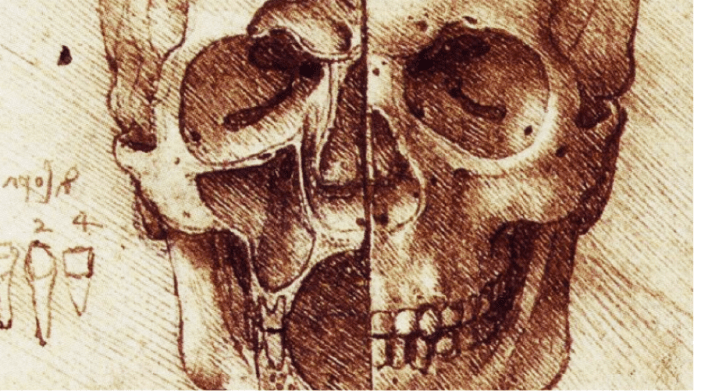
Lenoardo Skull

Over the summer, I read Leonardo Da Vinci by Walter Isaacson. Or more accurately, I listened to the plummy narration by Alfred Molina on Audible. I thought about eudaimonia a lot while listening to the book. If there is anyone who embodies human flourishing, it’s Leonardo, a left-handed vegetarian who liked to wear rose tunics, rarely turned in a commission on time, and never felt like a painting was ever truly done. He would immerse himself into the study of human anatomy (above is one of da Vinci’s anatomical drawings), and artistic perspective, and tweak his paintings to reflect his findings, sometimes decades after beginning the piece. He struggled with math and with Latin, subjects in which many learned men of his generation were well-versed.

Isaacson is fascinated by Leonardo’s insatiable curiosity and his ability to let his imagination not just run free, but run rampant—his notebooks contained plans for a helicopter, a self-propelled cart, and scuba gear, among other things, that were centuries before their time. The notebooks contain lots of Leonardo’s “to do” lists. Two of the most awesome entries: “Describe the tongue of woodpecker” and “Go every Saturday to the hot bath, where you will see naked men.”

For Isaacson, Leonardo is the shining example of an unusual genius who was creative and innovative across multiple disciplines. Isaacson also calls Leonardo an understandable genius because he had some serious strikes against him in the 15th century world he was born into. He didn’t have much formal schooling and was born out of wedlock. He also procrastinated a lot, was a moody perfectionist, and was a sucker for at least one young, feckless man. What Leonardo did have: intense observational skills, curiosity, a strong will, and ambition.

Isaacson is so inspired by Leonardo’s example of an incredibly rich life of creation and imagination that he poses the question, “How can we be more like Leonardo?”  His answers, paraphrased from the final chapter of the book:

  • Be relentlessly and randomly curious about everything around you
  • Seek knowledge for its own sake—it doesn’t have to be useful, do it for pure pleasure
  • Retain a childlike sense of wonder—keep asking yourself why things are the way they are, like why IS the sky blue?
  • Observe acutely—let your observations fuel your curiosity
  • See things unseen—use fantasy to imagine what does not exist
  • Go down rabbit holes—investigate something that interests you, just for the hell of it (Isaacson calls it the “pure joy of geeking out.”)
  • Respect facts—critical thinking and observational experiments are your friends
  • Be fearless about changing your mind based on new information—if the results of your experiment don’t support your theory, be ready to change your mind
  • Procrastinate—this one should be easy. Leonardo thought creativity required lots of time for ideas to marinate and gel
  • Let the perfect be the enemy of the good —don’t settle for OK when you know you can do better (I think most of us can take a pass on this one)
  • Avoid silos—a lot of good creative work is found where different disciplines intersect
  • Let your reach exceed your grasp—so, you can’t understand a certain problem, but you can understand why some problems are so hard to solve
  • Create for yourself, not just for patrons—we all need creative outlets to lead fulfilling lives
  • Collaborate—do fun things and absorbing projects with smart people
  • Make lists—the weirder, the better
  • Take notes on paper—make your own notebooks of discovery
  • Be open to mystery—you might solve it and learn something, or you might just marvel at something that fascinates you

In a few weeks, I’ll start taking classes again.  I’m sure that I can manage the procrastination part … we’ll see about the rest.
August 26, 2017

Screen Shot 2017-08-26 at 10.13.06 PM

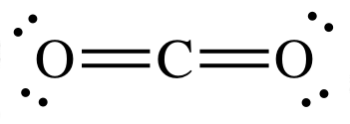
One of the perks of a class-free summer is the ability to go down any tempting rabbit hole without the guilt of a neglected problem set hanging over my head. I was curious about Joseph Black, the 18th century Scottish chemist known for discovering carbon dioxide and magnesium. His studies of latent and specific heat became the foundations of the field of thermodynamics. Black flourished during a time of creative and cultural growth known as the Scottish Enlightenment. From the late 1600s to the early 1800s, Scotland bubbled over with intellectual giants and produced men like Frances Hutcherson, Adam Smith, Henry Kames, and David Hume.

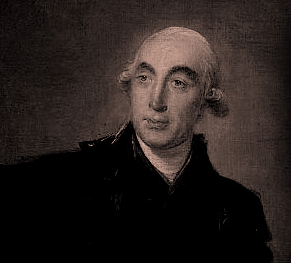
Sam Kean, author of Caesar’s Last Breath: Decoding the Secrets of the Air Around Us credits Black with being not only brilliant, but fun. He gave exciting public lectures where he filled balloons with light gases—audiences were sure that invisible strings were lifting the balloons to the ceiling. Black isolated carbon dioxide in 1754, when he was about 26 years old.  Later he figured out that people exhale carbon dioxide after he put a beaker of slaked lime in the rafters of a Scottish church before a service. When exposed to carbon dioxide, slaked lime produces milky precipitates. At the end of the 10-hour service (!), the fluid in the beaker was white from the preacher’s exhalations as well as the other human gas-bags in the room. Here is a picture of him in his later years; I admire his luxurious eyebrows, especially the right one.

Screen Shot 2017-08-26 at 7.45.19 AM

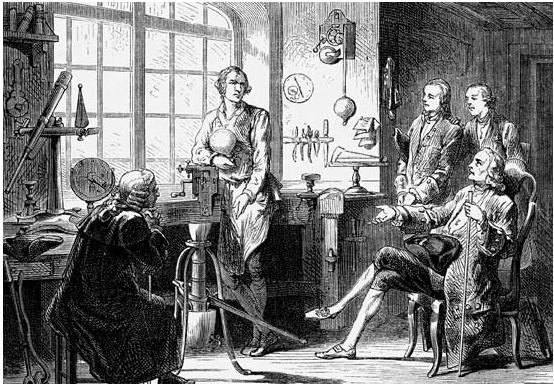
Black liked to drink and drank a lot of sherry and claret with his cronies, Adam Smith and David Hume. This did not, however,  slow him down. In addition to being a chemist, he was a practicing physician and busied himself with creating industrial processes, like bleaching systems for the linen industry. In 1755, he became Professor of Medicine and Chemistry at the illustrious University of Edinburgh, a position he held for more than 30 years. Adam Smith said, “No man I know has less nonsense in his head than Doctor Black.” Black also was close friends with James Watt, an instrument maker at the University of Glasgow famous for improving the design of the steam engine that fueled the industrial revolution. Below is picture of Black visiting Watt in his workshop. I doubt it was that clean and orderly.

Screen Shot 2017-08-26 at 1.16.05 PM

Voltaire said, “We look to Scotland for all our ideas of civilization.” The Scots were leading the charge to a more humanistic, modern society with their writings about civil liberties, philosophy, politics, science, and economics. I totally drank the same kool-aid as Voltaire after reading Arthur Herman’s How the Scots Invented the Modern World. Herman writes, “Basic principles that the Scottish Enlightenment enshrined: common sense, experience as our best source of knowledge, and arriving at scientific laws by testing general hypotheses through individual experiment and trial and error.” What’s not to love?

This focus on learning and education had deep roots in the culture. In 1696, the Scottish parliament’s “School Act” required every parish to have a school. By the end of the 1700s, Scotland had a literacy rate higher than any other country, and publishing houses and paper mills were a large chunk of the domestic economy. They believed that the goal of education was not only to understand the world around us, but also to spread the wealth and teach others. And they were excellent at teaching others. Only Episcopalians could attend Oxford, Cambridge, or Trinity in the 1700s, so non-Episcopalians from all over flocked to the Universities of Glasgow and Edinburgh.

Edinburgh in particular became home to the world’s leading medical school, famous for producing the most effective physicians. Interestingly, doctors-in-training at Oxford and Cambridge were discouraged from touching patients, leaving actual physical contact to servants. Professor William Cullen (Adam Smith’s personal physician) at the University of Edinburgh thought that was nonsense. He did all kinds of crazy things, like lecturing in English instead of Latin and encouraging students to challenge him in class. Cullen’s motto was “no facts, no theory” – without data, how could you have a meaningful understanding of how things work? In 1750, Cullen’s fellow professor John Rutherford created the first clinical rounds system for training young doctors.

Herman writes:

The hallmarks of Scottish medicine were close clinical observation, hands-on diagnosis, and thinking of objects such as the human body as a system–not so different from the practical approach of engineers such as James Watt. In fact, science and medicine were probably more closely linked in Scotland than any other European country. Together with mathematics, they formed the triangular base of the Scottish practical mind.

Scottish doctors lay the groundwork for both modern medical practices and the discipline of public health. Edinburgh-educated Thomas Percival persuaded Manchester hospitals to keep birth and death statistics to trace the path of epidemic diseases.  He also created what is probably the first code of medical ethics. John Farrier, also Edinburgh-educated, set up the world’s first board of health in Manchester, and he was influential in spreading the practice of disinfecting fever wards in hospitals.

I wish there were some women to add to the list of Scottish chemists, philosophers, and physicians, but a desultory dig into Google revealed…not much. Prof. Charles Hope (Charles Darwin was one of his students) of the University of Edinburgh gave a short course of chemistry lectures attended by ladies in the 1826, but that’s about it.

Lately, I have pestering friends and family with tidbits of Scottish prowess.  For those who have the appetite, I will close with some snack-like treats:

  • Charles Maitland-performed the first smallpox inoculation in1718
  • James Lind–figured out that scurvy could be cured by citrus fruits in 1747 and did the first controlled experiment in history to test his theory
  • John Pringle–a Scottish physician (and often Ben Franklin’s travel companion) developed idea that noncombatants are army medics and wounded and inspired the creation of the Red Cross
  • James Hutton–first person to suggest that that the earth is older than 6,000 years. In 1788 published his theory that earth long predated man and would last long afterward. Known as the Father of Modern Geology
  • William Murdoch–James Watt’s assistant, invented gas lighting in the 1790s
  • James Simpson–introduced chloroform as anesthetic for surgery in 1847
  • Sanford Fleming–came up with idea of worldwide standard time zones
  • Lord Kelvin–proposed an absolute temperature scale in 1848 (known as the Kelvin scale). Formulated the second law of thermodynamics-heat will not flow from a colder body to a hotter body
  • Livingstone–19th century missionary, explorer, philanthropist, and physician. Tried to find source of the Nile, instrumental in ending the East African Arab-Swahili slave trade
  • Andrew Hallidie–Scottish engineer designed and built the San Francisco cable car network 1873
  • Alexander Graham Bell–patented first telephone. Gifted teacher of the deaf (his Mom and wife were deaf), Helen Keller was his most famous pupil


July 13, 2017

Screen Shot 2017-07-13 at 3.25.56 PM

Ro told me about Miracle Mike, the headless chicken, while we were stuck in traffic on the 405.  He said a farmer planned to have chicken for dinner, went into his yard with an axe, and beheaded a chicken. The chicken, separated from his head but undaunted, lived a relatively good life for 18 months after the unfortunate incident. I assumed Ro was pulling my leg, but it turns out this story is all, delightfully, true. Here is Miracle Mike, majestically posed with his head, like the Headless Horsemen but less ominous because he’s just a Wyandotte chicken.

Screen Shot 2017-07-13 at 9.16.20 AM

The farmer was Lloyd Olsen from Fruita, Colorado, and the year was 1945. Olsen did indeed take off Mike’s head, or at least a good chunk of it. He missed one ear, most of the brain stem, and the jugular vein. Olsen took Mike to the University of Utah to establish the chicken’s credentials, then took him on road so the public could check him out at 25 cents a pop. Mike made Olsen about $48,300 a month in today’s dollars.

Sans head, Mike could still walk around and would try to crow, preen, and peck for food, but Olsen had to feed him with an eyedropper. I wonder if he tried to mate, too. Wikipedia is silent on the subject.

Tragically, Mike choked to death on a kernel of corn that got stuck in his throat one night in a Phoenix motel.  His spirit lives on in his home town with “Mike the Headless Chicken Festival” held each June.

Evidently Mike didn’t bleed out at the time of the decapitation because of a blood clot, and it turns out that his chicken reflexes were fine because the brain stem was still mostly there-hard to believe based on the picture, but OK. My neighbor raises chickens and says she feels less bad about eating them now that she has lived with them.  I wonder about chicken biology and how many other creatures can get along fine without heads. I asked my friend Elaine who has a PhD in a neuroscience-y field to weigh in on the subject. Shockingly, she hasn’t gotten back to me yet.

The Miracle Mike story marked the beginning of summer, because Ro told it to me during his last week of school. Summer in Seattle can be an unsettling time. The days are so long, sometimes even sunny, and as result, people get a little manic. Oliver can’t sleep past 4:30 am despite blackout blinds and the birds wake me up sometimes as early as 5. I had planned to take an inorganic chemistry class summer quarter, but all the available instructors got less than stellar reviews on Rate My Professor. I learned my lesson last summer and decided to do an on-line course in Python programming instead, which is going meh because I try to watch horror movies while listening to lectures and programming.

Summer continued as strangely as it began when Patrick and I went to Las Vegas at the end of June for a dance competition. We moved slowly in the 107-degree heat and doused ourselves in sunblock.  We shared our hotel room with two other tap dancers, one 18 (like Patrick) and one 19. We watched South Park and complained about the eerie interior world of the casinos, with their windowless restaurants and bored-eyed, scantily-clad gogo dancers who would appear after midnight on various gambling tables.

The tap dancers were fun and optimistic roommates, not unlike a pile of adorable puppies-most of the time. But occasionally their antics would wear thin and I wanted escape even from that air-conditioned refuge. The noise really got to me –  Vegas tries to stun you into submission with noise. It was everywhere from the clangs and bells of the slot machines to the thumping beat of pop music blaring in the elevators. Oliver said the last time he was in Vegas he hid out in the library (!) just off the Strip.

My college roommate, Liz, came to the rescue and we went to Red Rock Canyon for a blissfully quiet couple of hours (that’s a picture of Red Rock above).  We saw the “Hands Across Time” pictographs made about 2,000 years ago by Native Americans who lived in the gorgeous Willow Springs Canyon part of Red Rock. They painted their hands red, possibly with minerals, eggs, and saliva, and jumped up or stood on each other’s shoulders or something to slap the rock.

Below you can see where the handprints are located on the rock, then a close-up of the hands themselves. Visitors aren’t allowed to get too close to the fragile pictographs, and unfortunately the photo doesn’t do them justice. They are beautiful and somehow cheerful to me. Perhaps they were left to indicate a good hunting site or something equally pleasant.

Now we’re halfway into July and the 4 Vegas roommates are going down to LA for a week and a half of dancing at two different tap festivals. My science classes don’t rev up again until the end of September. Until then, I have to keep the brain oiled and intend to read I Contain Multitudes: The Microbes Within Us and a Grander View of Life (or, as Patrick says, I Contain Multiple Dudes) by Ed Yong, watch the 25-part Virology lecture series by Vincent Racaniello, a scientist at the Medical Center of Columbia who deeply loves viruses, and do some volunteer research for Komera, a “small but mighty” non-profit that helps girls attend secondary school and beyond in Rwanda. That’s the plan for the rest of the summer.


June 11, 2017

Screen Shot 2017-05-12 at 4.53.39 PMA palate cleanser of art and science is in order after 11 weeks of molecular biology. It was a challenging class, with a gifted instructor and a high quality TA. I really wish I had taken it as an undergrad – I love the combination of chemistry and biology. Chemistry never lies – under the same conditions, the same reaction will always happen. Biology is messy, complicated, and alluring, because a seemingly endless combination of factors influence the outcome of biological system interactions. Untangling cause and effect becomes even more complex when feedback loops are involved.
I pounded my head against lots of scientific papers trying to get at the heart of the research and why it mattered. Here is the kind of material we looked at in class:

In both two- and three-dimensional culture, NPCs form kidney organoids containing epithelial nephron-like structures expressing markers of podocytes, proximal tubules, loops of Henle and distal tubules in an organized, continuous arrangement that resembles the nephron in vivo.

Translation: Hey, we can grow functioning kidney cells in a petri dish!

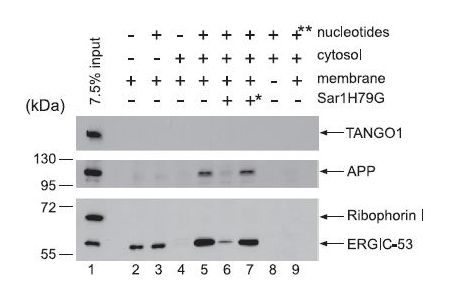
Or what became the bane of my existence, interpreting western blots, which are a way to identify specific proteins from a mixture of a bunch of different proteins:

Screen Shot 2017-06-10 at 8.46.55 AM

Translation: TANGO 1 is not found in transport vesicles leaving the endoplasmic reticulum. To me it looks like a weird test result from something done on a Soviet submarine in the 1950s.

My favorite topic of the quarter involved using scorpion venom from the Israeli Death Stalker to light up brain tumors. The venom binds to cancer cells, and when you tag those venomous molecules with fluorescent markers, the cancer cells glow. Here’s what it looks like:


This glowing paint allows surgeons to resect brain tumors without taking out normal brain tissue. If heathy brain tissue is removed, neurological damage can result, and if all of the tumor bits are not resected, remaining cancerous cells can multiply and cause havoc. Dr. Jim Olsen at Fred Hutch developed the tumor painting technique. He has a tattoo of the scorpion venom’s chlorotoxin molecule on his arm and is one of my heroes. He explains the tumor paint process here. For me, the video emphasizes that behind all the exciting advances in medical research and treatments, real people are benefiting, and some modicum of suffering is diminished.

What’s intriguing about the tumor technique is that it is both powerfully effective and visually striking. A number of artists have been inspired by the beauty of the molecular world. The illustration at the beginning of this post is by David Goodsell, an associate professor at Scripps Research Institute. It’s the cross section of a single bacterial cell shown at one million times magnification and is the cover of his book, The Machinery of Life. The book is chock full of his gorgeous watercolor illustrations of cells, as well as cool computer generated images of molecules. Most molecules are colorless, so Goodsell comes up with his own lush and trippy color palettes to highlight cell interiors. He has a web page of his work and encourages people to go ahead and use them for personal presentations – he just asks that they give him credit. Check out some of his creative endeavors depicting E. coli, collagen, and cytoplasm:


Mike Tyka is a scientist/artist who makes sculptures of protein molecules. He has a Ph.D. in Biophysics, currently works at Google, and co-founded ALTSpace, a community art workshop in Seattle. I love that he helped create the Groovik’s Cube, billed as “a 35ft tall, functional, multi-player Rubik’s cube.” You can watch its time-lapse assembly here. Two of his sculptures are shown below. On the left is the Angel of Death, made out of copper and steel. It’s a representation of the ubiquitin molecule– once a protein is tagged with ubiquitin, it will be degraded and its components will be recycled by the cell. On the right is Tears, depicting a lysozyme with a carbohydrate; the carbohydrate part in is bronze, the lysozyme in clear lead glass. The lysozyme is breaking down the carbohydrate, which I assume is part of a creepy bacteria trying to invade a nice, normal cell.


Months ago I came across a few articles about setting the folding of proteins to music. Biology is all about protein folding—the physical process of proteins assuming a 3-dimensional structure. That structure is essential to their function. If a protein is misfolded, all kinds of stuff can go horribly wrong, from allergies to Alzheimer’s.

Sonification is the technique of taking data and transforming it into melodies. In other words, why not listen to data, instead of just looking at it? Three questions guide the research: what could protein folding data sound like, what are the analytical benefits, and can you hear anomalies in the data?

Well, the music doesn’t sound that good to me, but I love the idea of taking a novel approach to analyzing data. Researchers used some funky software to convert the folding shapes of three proteins to musical code. People can just listen to the sound track to identify patterns or wrong notes.

I think it would be really excellent to have Patrick and Rowan’s talented and amazing tap teacher, Josh Scribner, choreograph something to the music of protein folding. This would be appropriate given the name of his troupe is Alchemy Tap Project (ATP, you know, like adenosine triphosphate) and the annual show is called Beat Science. I imagine an audience of tap dancing scientists saying, “Wow, that interpretation of ubiquitin was quite piquant,” or “The tubulin was a bit off, no?”

April 23, 2017

My big take-away from cellular biology is that we are all meat bags, and, furthermore, we are all meat bags of bias. Rowan says this is incorrect, we are more like water balloons. Point taken, we are made up mostly of water, but I say that since the dry weight of cells is made up mostly of proteins, I’ll stick with meat bags. Ro tells me I’m not alone in this idea – he tells me to check out The Oatmeal:

Does it help you cope with the fact that you are a bag of meat sitting on a rock in outer space and that someday you will DIE and you are completely powerless, helpless, and insignificant in the wake of this beautiful cosmic shitstorm we call existence?

As meat bags, we mostly want to do two things: engage in cellular respiration (a complex chemical reaction that sounds like cells breathing, but is more like cells eating to provide energy for all the stuff our bodies do) and mating (to pass on our genes to be reproductively successful, as in “survival of the fittest” successful). I like that you don’t have to actually be physically fit to win the survival of the fittest award. In fact, you can sit on the couch with a heating pad, like a blob. All you need to accomplish is to reproduce.

In the real world, finding a mate with whom to reproduce requires a lot of emotional, and possibly financial, resources. We don’t have to think about the cellular respiration part but the mating part takes up so much time and energy that maybe we would be better off to be like Mr. Spock and have a mating season as portrayed in the Star Trek episode Amok Time, but without the part about fighting to the death. It would be more efficient, but probably less fun.

The Oatmeal comic is asking the question, “Does religion helps you endure existential angst of meat baggery? If so, carry on.” For me, the scientific process helps mitigate that angst. Careful, incremental work over time can have an incredibly powerful impact—think about the study of cancer, or viral infections, or data analytics. Our individual lives are brief, but contributing to a greater good provides some solace for the short duration that we get to be here.

I like the idea of society functioning as a meritocracy, where the best ideas win out. But the fly in the ointment is that we exist in the context of social, political, and economic environments, and that’s where things get messy.

It’s also where the bias part comes in. As meat bags of bias, we make all kinds of snap decisions, based on anecdotal data, that we are sure are true. In Daniel Kahneman’s book, Thinking Fast and Slow, he writes about how we are riddled with cognitive biases, are poor at doing cost/benefit analysis, and are overconfident about our ability to understand the world. I couldn’t get through the whole book, but here is an overview of the logical fallacies Kahneman describes.

Even scientists, who are trained to recognize and avoid biased thinking, fail all the time. One science blogger noted that when double-blind review processes are used in scientific journals, more papers written by women get published then in single-blind processes (that when reviewers know who writes a paper, but the author doesn’t know who’s doing the reviewing).

The social environment also imposes obstacles to those who don’t look like scientists are “supposed” to.  Maria Geoppert-Mayer shared the 1963 Nobel Prize for physics for her discoveries about nuclear shell structure. She was born in Germany in 1906, where she was refused entry into Ph.D. programs because she was a woman.  She attended lectures anyway, and was eventually granted her doctorate in theoretical physics.  After moving to the U.S., she worked at Columbia University, but for no salary, because, you guessed it, she was a woman. When she won the Nobel Prize, a San Diego newspaper headline said “S.D. Mother Wins Nobel Prize.” Can you image one that says something like “Father of Twins Wins Nobel Prize”?

Screen Shot 2017-04-23 at 4.05.17 PM

A couple of months ago I saw the movie Hidden Figures, which chronicles the real-life story of three African-American women who worked at NASA in the 1960s. Katherine Goble, Mary Jackson, and Dorothy Vaughan were all kick-ass mathematicians who faced the double-whammy of racism and sexism. It was depressing to watch the casually-dispensed humiliations the women endured.

But I like to think that what keeps people going when they face persistent and pervasive bias in scientific fields is their love of the work.  That seems to have been true of Geoppert-Mayers, who said, “Winning the prize wasn’t half as exciting as doing the work itself.” That’s what I am looking for – work that is satisfying and worthwhile. We’ll always be meat bags of bias, but we can come to deep insights by just powering through and staying true to what we discover.

March 23, 2017

Screen Shot 2017-03-22 at 1.01.50 PM

One day in cellular biology, I sat next to a guy named Eric, a bearded ex-marine who speaks fluent Chinese. He had a drawing of what looked like a super hero in drag sporting red high heels on the cover of his notebook. “Who is that?” I asked. “Iron Man relaxing at home” he said. Later, when we were delving into Mendelian genetics, I asked if he knew the difference between co-dominance and incomplete dominance. “I do in a relationship,” he said.

Both my human genetics and cellular biology classes are done for the quarter. I have 10 class-free days ahead of me that I plan to spend in an orgy of reading (which will probably devolve into binge-watching Homeland and The Americans) before I start a molecular biology class at the UW and a cone-of-shame math class at Seattle Central. I’m required to take it, something I should have done in high school, before I’m eligible to begin my year of inorganic chemistry.

The human genetics class didn’t even seem like work because it was so weird and engaging. I love the story of the founding father of modern genetics, Gregor Mendel. He was a 19th century Augustinian friar at a monastery in Brno (in what is now the Czech Republic) who figured out how traits are passed from parents to offspring. He failed the exam to become a teacher, not once, but twice, before resigning himself to working as a substitute teacher. He wasn’t recognized for his discoveries in his lifetime, which sounds so sad to me, like Vincent van Gogh not being celebrated for his marvelous work while he was alive. But unlike van Gogh, Mendel appears to have led a quiet, industrious life, and died a natural death.

Mendel deduced the laws of genetic inheritance—that genes come in pairs and that one is inherited from the mother, the other from the father, from his work with pea plants. At the time of his experiments, people thought that traits where the result of blending or through acquired characteristics. For example, mate a black cow with a white cow and you will get a grey cow, or that giraffes have long necks because of stretching to reach the tops of trees for leaves.

Though genes weren’t called genes until the early 20th century, Mendel knew that little particles, or discrete, inheritable units, existed and that they were passed down from generation to generation. He called it particulate inheritance; it was a revolutionary idea, and the few people that heard about his conclusions thought he was nuts.

Beginning in the mid-1850s, Mendel meticulously fertilized thousands and thousands of pea plants by hand using paintbrush and monumental patience to see which traits persisted, disappeared, and re-appeared. He looked at seven different traits of pea plants, like color of flower, length of stem, and color of seed. By crossing tall plants with short ones, wrinkly seeded plants with smooth ones, he could describe dominant and recessive traits in statistical terms of consistent ratios and proportions.

The work must have been fairly tedious, but I picture him contentedly puttering around his flowers humming quietly under his breath. Below is a photo of Mendel next to a drawing of his beloved pea plant, Pisum sativum. I like his glasses, very minimalist-chic.

Mendel presented his finding in 1865, but no one appeared to be listening. He stuffed his paper with lots of statistics, which was unusual for the time, and eyes probably glazed over. For years, Mendel wrote about his experiments to Carl Nägeli, a respected plant physiologist in Munich. The significance of Mendel’s findings escaped Nägeli, whom I think of uncharitably as Shit-for-Brains, and Nägeli did not encourage Mendel in his research.

Eventually Mendel was promoted to abbot in the Brno Monastery and abandoned his scientific work. It wasn’t until 1900 that his work was rediscovered – sixteen years after his death. Mendel said:

My scientific studies have afforded me great gratification; and I am convinced that it will not be long before the whole world acknowledges the result of my work.

Mendel’s careful work in a small garden transformed our understanding of the world and laid the foundation for the science of modern genetics.

February 28, 2017

screen-shot-2017-02-28-at-7-37-50-am

Xander Blakely and I were office mates at Seattle’s Russian-American Foundation in the late 1990s. Those were good times, filled with lots of laughter and discussions of cross-cultural misunderstandings. Xander is a large man of Scandinavian descent, and I am not, but we both shared hearty appetites. I remember eating pasta for lunch one day and saying that I couldn’t shovel it in fast enough, and he understood. His linguistic abilities are amazing; actual Russians thought he was Russian born and bred. He wrote a highly entertaining book about four years he spent doing a start-up in Siberia called Siberia Bound: Chasing the American Dream on Russia’s Wild Frontier. He wanted to call it Running from Comfort, which I like a lot better, but his publisher nixed that.

While in Siberia, he fell in love with Natasha, a beautiful young student of mathematics. Before they married, he took her on her first trip outside of Russia to Venice, Italy. She was so overwhelmed by the beauty and elegance of the architecture and all things Italian in general, that she had to sit down, head in hands, saying “I just can’t take it.”  That’s exactly how I feel about stem cells.

Below is a picture of Natasha (in red) and me that I love because it has a secret. The blastocyst that would eventually become the cantankerous and recalcitrant infant Patrick, is, I believe, just about to implant and begin the work of embryonic stem cells–dividing and differentiating into organs, blood, and neurons.

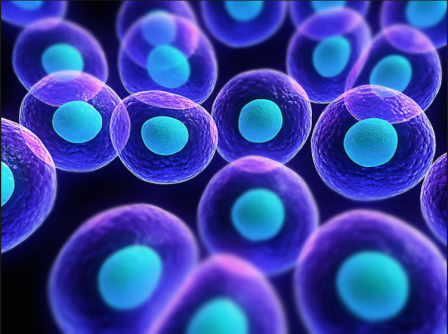
A blastocyst is the clump of cells that you end up with about 4 or 5 days after an egg is fertilized by a sperm.  These cells are known as pluripotent stems cells or embryonic stem cells, and they are mighty powerhouses of production and repair. Their pluripotency derives from their ability to self-renew, which means they can endlessly create copies of themselves, or differentiate and make cells that will form our three basic body layers. A stem cell can be the progenitor cell for the ectoderm (your basic outside layer-skin and nerve tissue), endoderm (inside layer-gastrointestinal and respiratory stuff, liver, pancreas, endocrine glands), and mesoderm (middle layer-bone, blood, muscles, connective tissue).

Stem cells have already been used to treat diseases of the immune system, blood diseases, and for skin grafts.  The possibilities for them to provide new treatments for diseases is positively mouth-watering. But in 2001, a big wrench was thrown into stem cell research when GW Bush banned federal funding for stem cells developed from preimplantation human embryos.

Using “leftover” embryos produced in fertility clinics made a lot of people squeamish. I’m not one of them. I understand that a fertilized egg is not the same thing as a sperm or an oocyte, but those sperm and oocytes also have the potential to become human life. I think, why not follow that logic all the way upstream to Monty Python’s Every Sperm is Sacred from The Meaning of Life. The clip, by the way, has some fun dance choreography.

Dr. Shinya Yamanaka of Japan found a way around the controversy in 2006 when he figured out to how reprogram adult cells to go back to the pluripotent stage, then forward to a differentiated cell. Imagine taking a skin cell and fiddling with it to produce a pancreatic cell. Dr. Yamanaka’s technique is called induced pluripotent stem cells, or iPS cells. iPS cells are made from the cell nucleus of an adult somatic cell. Somatic cells are body cells, as opposed to a germ cell like an egg or a sperm. No fertilized egg cells are required.

For this brilliant work, he won the 2012 Nobel Prize in Physiology or Medicine. This video about his discoveries is long, almost 17 minutes, but well worth the time if you are interested in the subject.  It has some really refined animations illustrating how stem cells work. I found it fascinating, though I did think that Dr. Yamanaka looked a little too young to get a Nobel Prize.

The promise is that patient-specific iPS cells will let us take our own pluripotent stem cells and create new tissues (or even organs!) for transplantation. We could make insulin producing cells, heart cells, corneal cells – whatever we need, without the risk of transplant rejection. It sounds like science fiction, and it may be decades away, but that’s a world I want to live in.

February 4, 2017

screen-shot-2017-02-04-at-7-54-36-am

None of the fun of cellular biology or genetics would be possible without the discoveries of Anton van Leeuwenhoek. Van Leeuwenhoek, a Dutchman who lived in 17th-century Delft, was the first human to see microscopic bacteria and protozoa. He didn’t speak Latin or Greek (like most scholars of his day), he didn’t have formal higher education, and he wasn’t affiliated with any university. He started a drapery business and originally starting fooling around with grinding lenses in order to see the quality of his fabrics in finer detail than existing magnifying glasses allowed.

His lens making eventually led him to look at an ox tongue in 1674 with his homemade and very odd-looking microscope. He saw the ox’s taste buds—this was inspired by seeing gunk on his tongue in a mirror when he was suffering from a sore throat, and he wanted to see what else was on tongues.

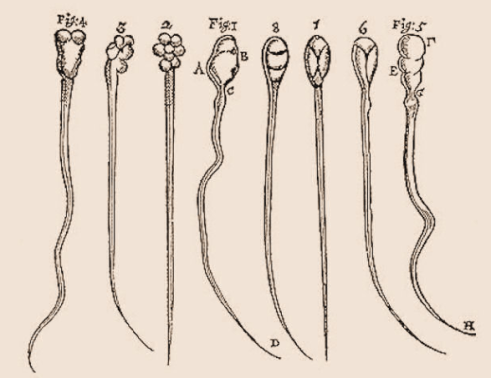
A couple of years later, he looked at cloudy water and saw “wee animalcules” wiggling around. He was delighted, and looked at all kinds of samples of “cavorting beasties.” Cloudy water led to animal sperm (like the picture above), the scum on teeth, and lots of other heretofore-unexplored flora and fauna. Below is a replica of one of his microscopes, which looks a bit like hardware for a steam-punk front door. Next to it is a drawing of van Leeuwenhoek in his curly and, I assume, itchy wig, and awesomely puffy garments, peering through the eyepiece of his tiny microscope. Did he really wear his wig alone at night?

Van Leeuwenhoek was not actually the first person to see a microorganism. That was probably the Englishman Robert Hooke, who looked at microfungus and ant eyes at about 20x magnification. In 1665, Hooke published his findings in the book Micrographia, and it caused a sensation when it hit the press.

Van Leeuwenhoek created microscopes that were able to focus at a remarkable 275x magnification. And even earlier in the 17th century, Galileo Galilei was experimenting with microscopy. He is famous for his 1609 observation that the moons of Jupiter orbited Jupiter, not the Earth. He used a Dutch telescope for that discovery, but he also made his own microscope in about 1619. Galileo may have seen something that could have been world-changing with his microscope, but he was totally uninterested in pursuing it. Evidently, the miniature world did not hold the same charms for him as the heavens. It’s a case of not finding what you are not looking for. Galileo was intrigued and consumed by the study of astronomy; van Leeuwenhoek was fascinated by something no one else was looking at, chiefly because he just wanted to know.

His famous quote:

My work, which I’ve done for a long time, was not pursued in order to gain the praise I now enjoy, but chiefly from a craving after knowledge, which I notice resides in me more than in most other men. And therewithal, whenever I found out anything remarkable, I have thought it my duty to put down my discovery on paper, so that all ingenious people might be informed thereof.

As one of my instructors said, it isn’t science until you write it down, and it seems van Leeuwenhoek agreed. Even though his observations were widely circulated during his lifetime and caused a flurry of interest, the study of microbes languished for the next 200 years. Van Leeuwenhoek did not share the details of his amazing lens grinding and it was only in the last century that others have been able to recreate his lenses. When he died in 1723, he left 26 of his microscopes to the Royal Society in London. Sadly, they have all disappeared, probably filched by sticky-fingered Royal Society members and currently residing in dusty attics across England.

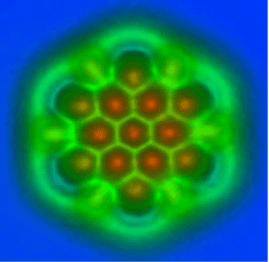
Today we have atomic-force microscopy with a resolution of fractions of a nanometer (a.k.a. one billionth of a meter). With this microscope, you can actually see the chemical bonds in individual molecules. It allows us to see how proteins fold, which should lead to amazing advances in treating diseases and increase our understanding of how the biological world works at an atomic level. Wouldn’t van Leeuwenhoek have loved to see this? Here is a nanographene molecule showing carbon-carbon bonds and it’s just gorgeous.

screen-shot-2017-02-01-at-8-39-06-pm

While researching van Leeuwenhoek, I found out that he was the executor of Johannes Vermeer’s will after the painter’s death in 1675. They must have at least been acquaintances, right? Did they dine and drink beer together? Talk about art and microorganisms? Did Vermeer look through one of van Leeuwenhoek’s microscopes at a particle of one of his own paintings? I would dearly love to know.

January 21, 2017

screen-shot-2017-01-17-at-7-44-17-am

The winter academic quarter is officially underway. I’m taking human genetics at Seattle Central and cellular biology at Shoreline. Both campuses are grim brick affairs, not lovely, but useful, like Penn Station. I would like to throttle the architect of all three venues, and anyone else who thinks that lowering ceilings or building classrooms with no windows is a good idea.

The first day of biology I found myself really missing my o chem study collective. My current classmates seem comatose and uncommunicative. Granted, the class meets at 7:30 am and not everyone is a morning person. Still, will I find people as interesting as Devin, who was a marine and worked on a nuclear submarine and has a love child? Or Emma, who is from Kyrgyzstan, speaks three languages fluently, gets by in a fourth, and has cheekbones that make me think of wide-open plains and horses? It’s a high bar.

Before the workload clamps down, I’m indulging in an orgy of reading and binge-watching and it’s been extremely satisfying. If the current political situation is getting you down, or if you just want to hear some witty dialogue accompanied by beautiful music, I highly recommend the series Mozart in the Jungle. Francis Bacon said, “There is no excellent beauty that hath not some strangeness in the proportion.” He could have been describing the remarkable face of Gael Garcia Bernal, one of the leads in Mozart. His nose gently cants off to one side, his upper lip is fuller than his lower, and his teeth are charmingly, un-Americanly, snaggled. He is also a man small of stature, which I have a marked preference for. This is good because I live in a household of men of small stature. I admire their agility, proportions, and lightness of tread. I remember seeing Bernal in Motorcycle Diaries and Y tu mamá también and thinking, who is that guy? When he’s on screen, you can’t take your eyes off him. Patrick agrees.

For books, I like to have a couple of serious non-fiction ones going (like The Gene), with a little high-end fiction (like Elizabeth Gilbert’s magnificent The Signature of All Things) and a sprinkling of murder mysteries (anything by Dorothy Sayers). I also like science books for the masses, like Sam Kean’s The Disappearing Spoon: And Other True Tales of Madness, Love, and the History of the World from The Periodic Table of Elements. The title to refers to the element gallium, which resembles aluminum but has the curious and unusual quality of melting at just above room temperature. Chemists like to have big fun and pull each other’s legs by serving tea or coffee with gallium spoons—you put the spoon in the hot liquid and it disappears.

From The Disappearing Spoon I learned some interesting tidbits about Dmitri Mendeleev, the 19-century Siberian-born chemist who is credited with coming up with the best iteration of the periodic table of elements. I find it delightful that he didn’t really believe in atoms, electrons, and radioactivity, or indeed anything that he couldn’t see with his own eyes. Evidently this wasn’t unusual at the time. Many thought of atoms as an intellectual construct rather than as a literal description of reality. Yet he correctly predicted 8 undiscovered elements in the periodic table, based on gaps in the carefully ordered atomic weights of discovered elements.

Mendeleev’s personal life was not without scandal. He fell madly in love with Anna Popova and threatened to commit suicide if she didn’t marry him. She did, despite the inconvenient fact that he was already married. His divorce came through a month after he and Anna married, which is nice, but the Russian Orthodox Church required people to wait 7 years after a divorce before lawfully retying the knot. Complaints about Mendeleev’s shenanigans made it all the way up to Tsar Alexander III. He didn’t get thrown into jail because the Tsar said, “I admit, Mendeleev has two wives. But I have only one Mendeleev.” The man sounds like he was a crank and difficult to get along with, but he did have a pretty impressive beard.

screen-shot-2017-01-21-at-6-17-10-pm

I like to read about the real lives of people who have done remarkable things. It reminds me that even the most talented among us suffer the slings and arrows of being human, fucking up right, left, and center. In this age of Facebook, when we all can edit out the unpleasant bits of life that make us feel vulnerable or inadequate, it’s nice to acknowledge that real life is messy and unpredictable. That’s actually what makes the world interesting and people lovable. Although it is sometimes hard to believe, I’d like to think that we are all doing the best we can with what we’ve got.

Its like how Annie Lamott talks about muddling through as a writer. “How do you begin? The answer is simple: you decide to. Then you push back your sleeves and start scribbling words down on paper, or typing at a computer. And it will be completely awful. It will be unreadable shit! You won’t have a clue how it amounts to anything, ever. And to that, I say, ‘Welcome’. That’s what it’s like to be a writer. You just do it anyway. At my church, we sing a gospel song called, ‘Hallelujah anyway.’ Everything’s a mess, and you’re going down the tubes financially, and gaining weight? Well, Hallelujah anyway!”

January 7, 2017

dna

I started reading Siddhartha Mukherjee’s book, The Gene: An Intimate History, partly because I’m taking a human genetics class this quarter and partly because I loved his other book, The Emperor of All Maladies: A Biography of Cancer. The latter was dense and chewy and took me some time to read and The Gene promises to do the same. The book opens with Mukherjee describing the toll of schizophrenia in his own family. Two of his four uncles and one cousin “suffered from various unravelings of the mind.” The cousin, Moni, who currently lives in an institution, is the son of an uncle who did not have schizophrenia.

Mukherjee eloquently describes how the spectre of insanity haunts his family, how he felt compelled to tell his future wife on one of their early dates about his family history. I totally get it, my own family has that particular sword of Damocles poised overhead. Why does mental illness develop in one sibling and not another? Why does it skip one generation, only to pop up in another?

Mukherjee says that “Like most Bengalis, my parents had elevated repression and denial to a high art form…” Yeah, Bengalis and Catholics have that in common. My brother and sister had various—let’s call them personality quirks, which went unaddressed and certainly undiagnosed. Neither finished high school, both were extremely bright and creative, both could make me laugh until I cried and my stomach hurt, both had trouble navigating day-to-day interactions with the world.

I say “were” because my sister passed away in 2013 from complications from Graves’ Disease, and my brother hasn’t spoken to anyone in my family in more than 19 years. In the time preceding my sister’s death, I would get frustrated trying to talk to her doctors, who couldn’t legally speak to me about her mental or physical condition. I wanted to organize her life from 1,000 miles away, but that sure as hell didn’t work. Thank goodness my dad and step-mom were nearby the morning my sister didn’t wake up and my teenage nieces called 911.

I was particularly close to my brother, Steve, whom I idolized. When I was 7 or 8, he was inspired by Willie Wonka and Chocolate Factory to transform our friend Mary’s backyard playhouse into a voluptuous candy paradise. When I was 14, I woke up one May 1st to find my bedroom full of flowers and Vanessa Redgrave on the record player singing The Lusty Month of May. Steve and I used to bike around our LA neighborhood at midnight on hot summer nights. We would find heavenly pockets of night-blooming jasmine and privet and ride back and forth through them until our noses couldn’t detect the scent anymore. It was magic. My husband says Steve is the only man he was ever remotely jealous of.

But there was some stuff that was not so magic, too, like the year he barely left his room. Or the morning of our dad’s second wedding, when my husband and I went to pick up Steve and he wasn’t home. Steve had left a sticky note on his kitchen counter saying he wasn’t going. He was supposed to be the best man but felt such animosity towards our dad that he couldn’t do it and didn’t have the guts to communicate his refusal. He left me to lie through my teeth to my stricken father and say that Steve was sick. Or not long after the wedding-ditching incident, when I realized that he had stopped talking to me, and that every phone call and letter would not be returned.

At some point in everyone’s life, you see a school, job, or person you want and say “You!” And that school, job, or person will say, “Nope, not you.” It doesn’t matter who you are, how intelligent, accomplished, beautiful, or rich. Someone, somewhere, will say “Not you.” It’s a universal human experience. It took me a long time to get over Steve saying “not you” to me. I realize that it was nothing personal, that his own demons and issues with our parents made him feel like cutting all ties was the only way for him to move foreword. But it was one of those things that results in a heart fissure that never quite heals.

When I was little I used to pore over old issues of National Geographic and see picture of exotic locales like Angkor Wat, Easter Island, and Borneo and think, ah yes, I will visit those places! It was also from National Geographic that I learned that space was infinite and the sun would eventually burn out. Both of these facts deeply disturbed me. I wanted space to be finite, but if it were, then nothing would go on forever after space ended. Spooky. I’m still not OK with the sun thing.

I also used to think that when we died, we would have a brief moment of perfect understanding of the entire universe before permanently snuffing out. We would understand all kinds of things, both brilliant and mundane—stuff like complicated math proofs, what dinosaurs really looked like, and why your grandma had that weird facial tic. I understand intellectually that I won’t be able to see everything on planet. But I still have hopes about the death-all-knowledge moment, even if it’s just some neural spasm. The pain of Steve’s ghosting has receded over time, but the curiosity remains. Why did he do it?