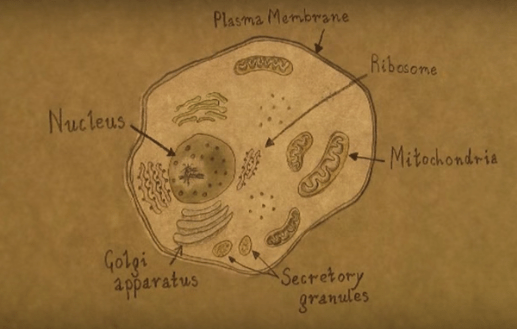
The winter academic quarter is officially underway. I’m taking human genetics at Seattle Central and cellular biology at Shoreline. Both campuses are grim brick affairs, not lovely, but useful, like Penn Station. I would like to throttle the architect of all three venues, and anyone else who thinks that lowering ceilings or building classrooms with no windows is a good idea.
The first day of biology I found myself really missing my o chem study collective. My current classmates seem comatose and uncommunicative. Granted, the class meets at 7:30 am and not everyone is a morning person. Still, will I find people as interesting as Devin, who was a marine and worked on a nuclear submarine and has a love child? Or Emma, who is from Kyrgyzstan, speaks three languages fluently, gets by in a fourth, and has cheekbones that make me think of wide-open plains and horses? It’s a high bar.
Before the workload clamps down, I’m indulging in an orgy of reading and binge-watching and it’s been extremely satisfying. If the current political situation is getting you down, or if you just want to hear some witty dialogue accompanied by beautiful music, I highly recommend the series Mozart in the Jungle. Francis Bacon said, “There is no excellent beauty that hath not some strangeness in the proportion.” He could have been describing the remarkable face of Gael Garcia Bernal, one of the leads in Mozart. His nose gently cants off to one side, his upper lip is fuller than his lower, and his teeth are charmingly, un-Americanly, snaggled. He is also a man small of stature, which I have a marked preference for. This is good because I live in a household of men of small stature. I admire their agility, proportions, and lightness of tread. I remember seeing Bernal in Motorcycle Diaries and Y tu mamá también and thinking, who is that guy? When he’s on screen, you can’t take your eyes off him. Patrick agrees.
For books, I like to have a couple of serious non-fiction ones going (like The Gene), with a little high-end fiction (like Elizabeth Gilbert’s magnificent The Signature of All Things) and a sprinkling of murder mysteries (anything by Dorothy Sayers). I also like science books for the masses, like Sam Kean’s The Disappearing Spoon: And Other True Tales of Madness, Love, and the History of the World from The Periodic Table of Elements. The title to refers to the element gallium, which resembles aluminum but has the curious and unusual quality of melting at just above room temperature. Chemists like to have big fun and pull each other’s legs by serving tea or coffee with gallium spoons—you put the spoon in the hot liquid and it disappears.
From The Disappearing Spoon I learned some interesting tidbits about Dmitri Mendeleev, the 19-century Siberian-born chemist who is credited with coming up with the best iteration of the periodic table of elements. I find it delightful that he didn’t really believe in atoms, electrons, and radioactivity, or indeed anything that he couldn’t see with his own eyes. Evidently this wasn’t unusual at the time. Many thought of atoms as an intellectual construct rather than as a literal description of reality. Yet he correctly predicted 8 undiscovered elements in the periodic table, based on gaps in the carefully ordered atomic weights of discovered elements.
Mendeleev’s personal life was not without scandal. He fell madly in love with Anna Popova and threatened to commit suicide if she didn’t marry him. She did, despite the inconvenient fact that he was already married. His divorce came through a month after he and Anna married, which is nice, but the Russian Orthodox Church required people to wait 7 years after a divorce before lawfully retying the knot. Complaints about Mendeleev’s shenanigans made it all the way up to Tsar Alexander III. He didn’t get thrown into jail because the Tsar said, “I admit, Mendeleev has two wives. But I have only one Mendeleev.” The man sounds like he was a crank and difficult to get along with, but he did have a pretty impressive beard.

I like to read about the real lives of people who have done remarkable things. It reminds me that even the most talented among us suffer the slings and arrows of being human, fucking up right, left, and center. In this age of Facebook, when we all can edit out the unpleasant bits of life that make us feel vulnerable or inadequate, it’s nice to acknowledge that real life is messy and unpredictable. That’s actually what makes the world interesting and people lovable. Although it is sometimes hard to believe, I’d like to think that we are all doing the best we can with what we’ve got.
Its like how Annie Lamott talks about muddling through as a writer. “How do you begin? The answer is simple: you decide to. Then you push back your sleeves and start scribbling words down on paper, or typing at a computer. And it will be completely awful. It will be unreadable shit! You won’t have a clue how it amounts to anything, ever. And to that, I say, ‘Welcome’. That’s what it’s like to be a writer. You just do it anyway. At my church, we sing a gospel song called, ‘Hallelujah anyway.’ Everything’s a mess, and you’re going down the tubes financially, and gaining weight? Well, Hallelujah anyway!”
 Successive Approximation
Glad for an update. Thank you, Erin. 🙂 Always a pleasure to read.
LikeLike